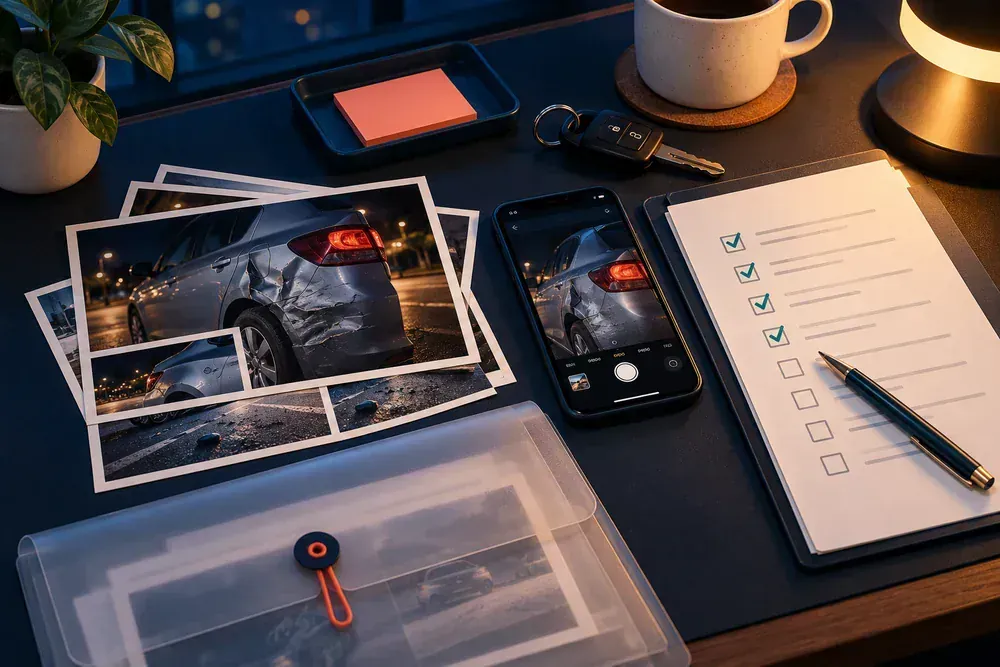
Record the crash scene and exchanges
- Note the location, direction of travel, weather, lighting and time without speculating about fault.
- Record driver, vehicle, insurer, witness and responding-authority details as safely available.
- Preserve wide scene views, vehicle damage details and the original files with their timestamps.
Connect each accident image to the fact it preserves
More photographs are not always better. Capture relationships that may be hard to explain later.
- Wide scene views
- Show vehicle positions, road layout, traffic controls, weather and lighting without entering traffic.
- Damage details
- Show each affected area and nearby undamaged context so the image is not isolated.
- Exchange records
- Connect driver, vehicle, witness and authority details to the correct event and time.
Collect evidence without entering traffic
- Call emergency services for injury, danger or when local rules require it.
- Capture wide context before close damage details, but never stand in a live lane.
- Exchange required information and record witnesses and report references separately.
Create a scene record without taking another risk
The goal is to preserve relationships between the road, vehicles and people, not to collect the largest possible number of photographs.
- Safe overview
- From a safe, permitted position, capture vehicle locations, lane layout, signs, signals, weather and lighting. Never stand in live traffic or ignore emergency directions to improve an image angle.
- Vehicle detail
- Photograph each affected area and enough surrounding context to identify the vehicle and location. Include visible debris or fluid only from a safe distance and avoid moving evidence unless safety or authorities require it.
- People and reports
- Keep driver, passenger, witness, authority and insurer details in separate labeled entries. Record the official report reference and where it can be requested rather than guessing when it will be available.
- Memory note
- After leaving the scene, write the route, direction of travel, sequence you observed and words exchanged. Mark uncertainty plainly and do not rewrite the note later to sound more certain.
Report injuries and symptoms honestly without trying to make an immediate medical conclusion. Emergency professionals, clinicians, authorities and insurers each have different roles in the record.
Build a factual record of the scene
Safety over photographs
Move away from traffic if possible, follow local law and call emergency services for injuries or active hazards. Never stand in a live lane to capture an angle.
Photograph the context
When safe, capture vehicle positions, road layout, signs, conditions, damage and debris. A short narrated video can preserve relationships between details.
Exchange and verify
Collect names, contact and insurance details as local rules require. Record witnesses separately. Do not speculate about fault at the scene.
What a useful scene set shows
Include approaches to the collision, lane markings, signs, signals, lighting, weather, debris and final vehicle positions. Photograph all sides of each vehicle and any visible child seat or damaged property relevant to the event.
After leaving the scene
Write a factual account while memory is fresh and save original media. Report through the insurer's official channel, describe injuries cautiously as symptoms may change, and ask where repair or medical documents should go.
Records that support the next step
Use the insurance claim evidence checklist to track scene, cost and communication records without uploading them.
Before an inspection, prepare for the insurance adjuster's visit with an area-by-area file.
Questions about building the record
Should I admit fault?
Exchange facts and cooperate with required reporting, but avoid guessing about fault at the scene.
What if the other driver will not share information?
Do not escalate a confrontation. Record what you safely can and contact local authorities or your insurer for the applicable process.
Processes, rights and deadlines depend on your location, provider and policy. Use the relevant official service for your jurisdiction.