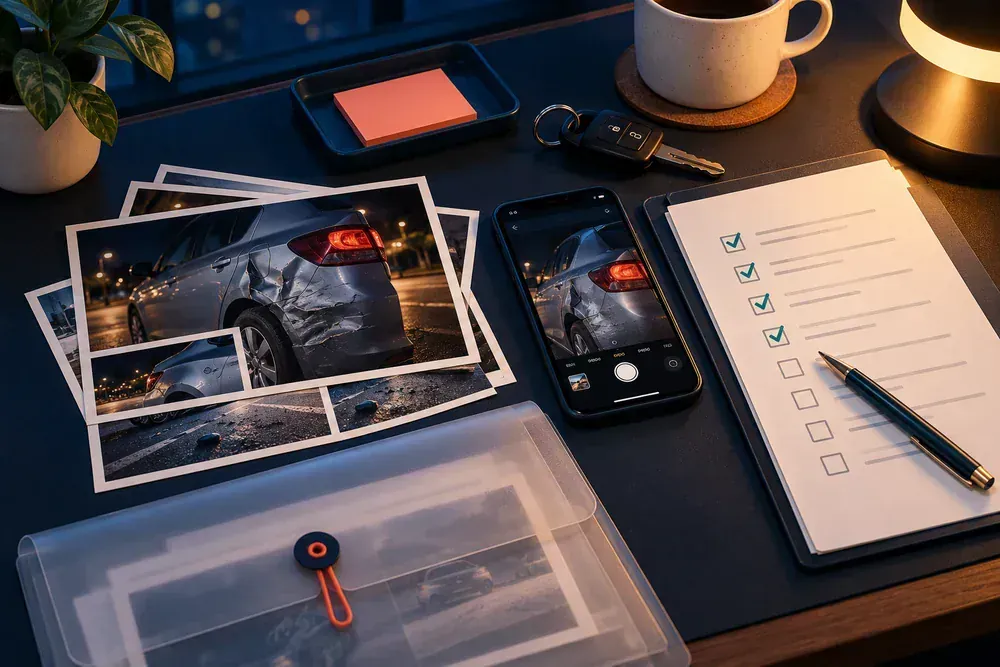
Prepare the facts before the next contact for liability incident record
- Arrange emergency help and prevent continuing danger.
- Record the location, condition, witnesses and exact statements you received.
- Notify the insurer and avoid negotiating or promising payment yourself.
The liability incident record working path
Use this three-part path to keep the response to liability incident documentation guide factual. It separates the first reliable signal, the control that changes risk and the handoff that needs follow-up.
First signal
Write down the exact event that brought you to this guide. For liability incident documentation guide, use the provider record, physical condition or official notice rather than a guess about what may have happened.
Control point
Complete the first action that can prevent added loss, unsafe access or a changed record. Keep that control separate from later replacement, reimbursement or correction work.
Handoff
End with a named organization, a reference when one exists and a date to check again. A completed first step is not the same as a completed case.
Build a working record for liability incident documentation guide
- Scene chronology, people present and observed condition
- Photos, maintenance or business records and communications
- Insurer notice, demands received and confirmed handoffs
Briefing before you report liability incident record
A concise liability incident record briefing prevents an urgent conversation from becoming a long theory. Lead with the observable event, provide the record that supports it and name the answer still required.
- What you know
- For the liability incident record briefing, state this distinction clearly: Describe where people and objects were, what happened next and what condition was visible. Do not turn uncertainty into an admission or accusation. Keep the description tied to what you directly observed.
- What proves it
- Use the following evidence point when reporting liability incident record: Keep inspection logs, maintenance records, messages, contracts and camera footage that lawfully relate to the incident. Do not alter or backfill a record after the event. Preserve the original record and annotate a copy when explanation is needed.
- What not to assume
- Set this boundary during the liability incident record response: Be courteous and exchange necessary details, but let the insurer or professional adviser handle disputed responsibility. Public discussion can create an incomplete parallel record. Ask the responsible organization to resolve any conclusion that remains uncertain.
- What closes it
- Define completion for liability incident record with this follow-up: Forward letters, bills and legal documents promptly through the instructed channel. Record when they were received and who confirmed receipt. Confirm the result in the official account or a written reply before closing your record.
Before ending the liability incident record contact, repeat the next action in plain language. Record who owns it, when you will check the result and which official channel will show completion.
Make the next conversation specific: liability incident record
Facts come before fault
Describe where people and objects were, what happened next and what condition was visible. Do not turn uncertainty into an admission or accusation.
Preserve ordinary business or property records
Keep inspection logs, maintenance records, messages, contracts and camera footage that lawfully relate to the incident. Do not alter or backfill a record after the event.
Limit direct argument
Be courteous and exchange necessary details, but let the insurer or professional adviser handle disputed responsibility. Public discussion can create an incomplete parallel record.
Track every demand and handoff
Forward letters, bills and legal documents promptly through the instructed channel. Record when they were received and who confirmed receipt.
Questions to settle before moving ahead about liability incident record
Should I apologize?
Express concern for a person's wellbeing without speculating about legal fault or coverage.
Can I repair the condition immediately?
Address ongoing danger, but document the condition and preserve relevant parts when safe before permanent changes.
Prepare for the step that follows: liability incident record
When another system is involved, open pet insurance emergency claim.
A connected warning may require power surge appliance damage.
Return to the complete first-action plan for the whole incident sequence.
Processes, rights and deadlines depend on your location, provider and policy. Use the relevant official service for your jurisdiction.