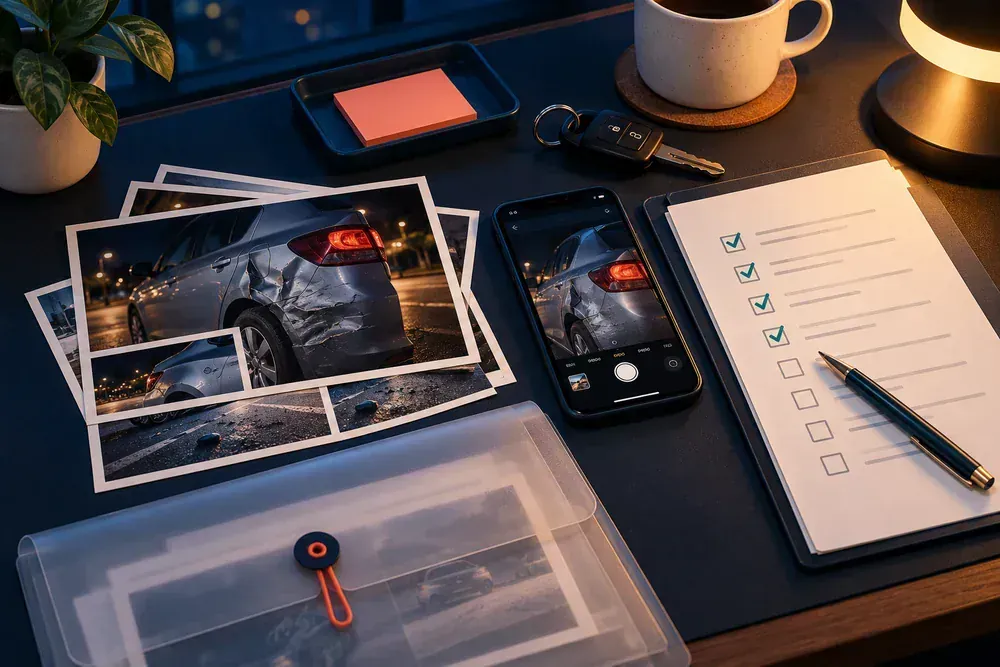
Build a working record for hit-and-run claim evidence checklist
- Collision location, time, direction and partial vehicle description
- Witness contacts, camera locations and police reference
- Scene images, damage estimates and insurer communications
The hit-and-run evidence working path
Use this three-part path to keep the response to hit-and-run claim evidence checklist factual. It separates the first reliable signal, the control that changes risk and the handoff that needs follow-up.
- First signal
- Write down the exact event that brought you to this guide. For hit-and-run claim evidence checklist, use the provider record, physical condition or official notice rather than a guess about what may have happened.
- Control point
- Complete the first action that can prevent added loss, unsafe access or a changed record. Keep that control separate from later replacement, reimbursement or correction work.
- Handoff
- End with a named organization, a reference when one exists and a date to check again. A completed first step is not the same as a completed case.
Preserve the records that can change for hit-and-run evidence
- Move out of active traffic and seek emergency help for injuries.
- Record the other vehicle only from memory or safe evidence, without pursuit.
- Report to police and insurer and preserve witness and camera leads.
Briefing before you report hit-and-run evidence
A concise hit-and-run evidence briefing prevents an urgent conversation from becoming a long theory. Lead with the observable event, provide the record that supports it and name the answer still required.
- What you know
- For the hit-and-run evidence briefing, state this distinction clearly: A plate fragment, vehicle type, color, direction and damage area may be more reliable than a forced complete plate. Label certainty honestly. Keep the description tied to what you directly observed.
- What proves it
- Use the following evidence point when reporting hit-and-run evidence: Note businesses, residences, traffic systems and dashcams that may have captured the event. Authorities or the insurer can explain how to request footage lawfully. Preserve the original record and annotate a copy when explanation is needed.
- What not to assume
- Set this boundary during the hit-and-run evidence response: Stay out of lanes, avoid confrontation and do not follow the vehicle. Safety is more important than a photograph. Ask the responsible organization to resolve any conclusion that remains uncertain.
- What closes it
- Define completion for hit-and-run evidence with this follow-up: Photograph overall position and close damage when safe, preserve tow and medical records and keep estimates distinct from final invoices. Confirm the result in the official account or a written reply before closing your record.
Before ending the hit-and-run evidence contact, repeat the next action in plain language. Record who owns it, when you will check the result and which official channel will show completion.
Build a file another person can follow: hit-and-run evidence
Partial details can still be useful
A plate fragment, vehicle type, color, direction and damage area may be more reliable than a forced complete plate. Label certainty honestly.
Camera evidence can disappear
Note businesses, residences, traffic systems and dashcams that may have captured the event. Authorities or the insurer can explain how to request footage lawfully.
Do not turn evidence collection into another crash
Stay out of lanes, avoid confrontation and do not follow the vehicle. Safety is more important than a photograph.
Connect each repair record to the event
Photograph overall position and close damage when safe, preserve tow and medical records and keep estimates distinct from final invoices.
Records that support the next step: hit-and-run evidence
A connected warning may require travel insurance claim.
If the facts point to a related problem, continue with lost luggage claim.
Return to the complete first-action plan for the whole incident sequence.
Questions about the evidence record about hit-and-run evidence
What if I only remember part of the plate?
Record exactly what you remember and your confidence. Do not fill missing characters by guess.
Should I post the vehicle online?
Give evidence to police and the insurer. Public accusations can misidentify someone and complicate the record.
Processes, rights and deadlines depend on your location, provider and policy. Use the relevant official service for your jurisdiction.