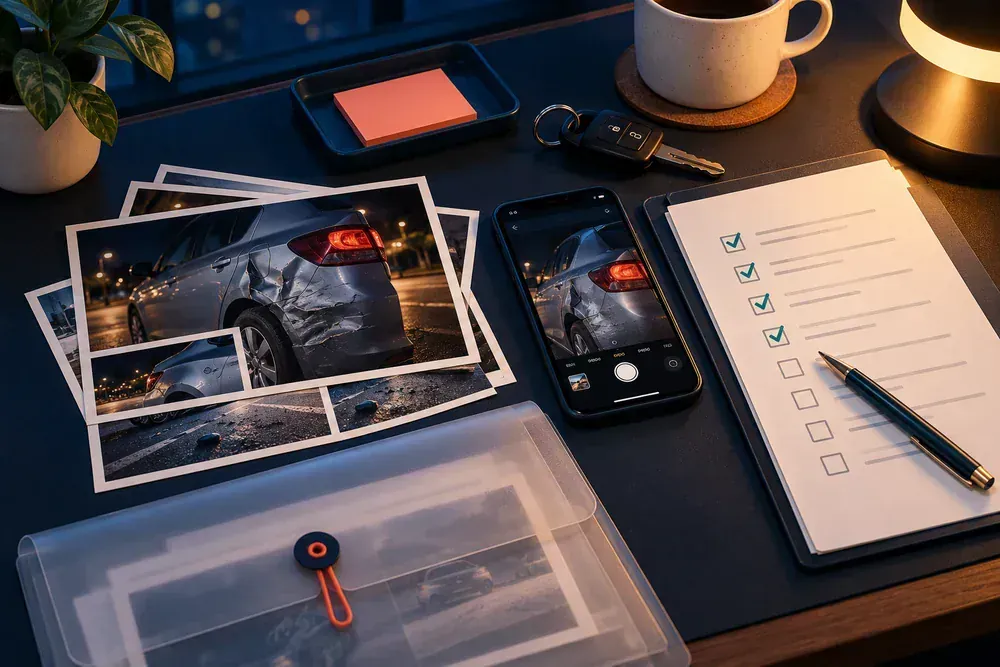
Record stolen belongings and tenancy details
- List each missing item with ownership support, approximate age and an honest value estimate.
- Preserve signs of entry and the incident report without disturbing evidence unnecessarily.
- Record landlord notifications separately from the renters-insurance claim and its reference.
Keep the building response and belongings claim connected
The landlord and renters insurer may need different records from the same event.
Building and access
Report damaged doors, locks or unsafe conditions to the landlord and preserve its repair instructions.
Belongings and expenses
Give the insurer an itemized ownership record and ask how temporary housing or urgent costs should be documented.
Secure the home before rebuilding the inventory
- Do not enter if the intruder may still be present; contact local authorities.
- Photograph damage and disturbed areas before cleanup when permitted.
- Notify the landlord and insurer separately and record each reference.
Coordinate the building record and belongings claim
A landlord may handle doors, locks and building access while a renters insurer reviews personal property and eligible extra costs. Keep the two records connected but separate.
- Secure access
- Report damaged doors, windows, locks or common-area access to the landlord or manager and preserve its repair instructions. Do not alter a possible entry point before safe documentation unless security requires it.
- Incident record
- Save the authority or building report, approximate time window, witness or camera information and photographs of disturbed areas. Ask how any available footage can be preserved.
- Belongings inventory
- List each missing item with room, description, ownership support and an honest comparable value. Use earlier apartment photographs, receipts, statements and retailer accounts to rebuild the record.
- Temporary costs
- Track emergency lodging, lock changes or necessary replacement items separately and ask which organization handles each cost. A landlord responsibility does not automatically determine insurance coverage.
Record every handoff between landlord, authority and insurer, including who owns the next action and its due date. This prevents one organization from appearing to have received a document that went only to another.
Coordinate the tenant, landlord and insurer records
Separate building from belongings
The landlord may handle doors, locks or building damage while a renters policy may address eligible personal property and temporary costs. Do not assume one report automatically reaches the other.
Rebuild the inventory
Use room photos, retailer accounts, receipts, statements, serial numbers, packaging and messages. Describe condition and purchase timing honestly.
Secure the unit
Ask the landlord or emergency service how locks or openings will be made safe. Keep written approval and receipts if you must arrange urgent work.
Track temporary needs
If the unit cannot be secured or occupied, ask the insurer what lodging or other expenses may qualify and what limits, approvals and receipts apply.
Records that support the next step
Rebuild ownership support with the verifiable theft inventory.
If the unit cannot be occupied, start tracking temporary living expenses without assuming every cost is covered.
Questions about building the record
Are belongings stolen away from home covered?
Some policies include off-premises coverage with limits or exclusions, but policy wording controls.
Do roommates share one policy?
Not automatically. Named insureds, household definitions and policies differ; each person should check their own coverage.
Processes, rights and deadlines depend on your location, provider and policy. Use the relevant official service for your jurisdiction.