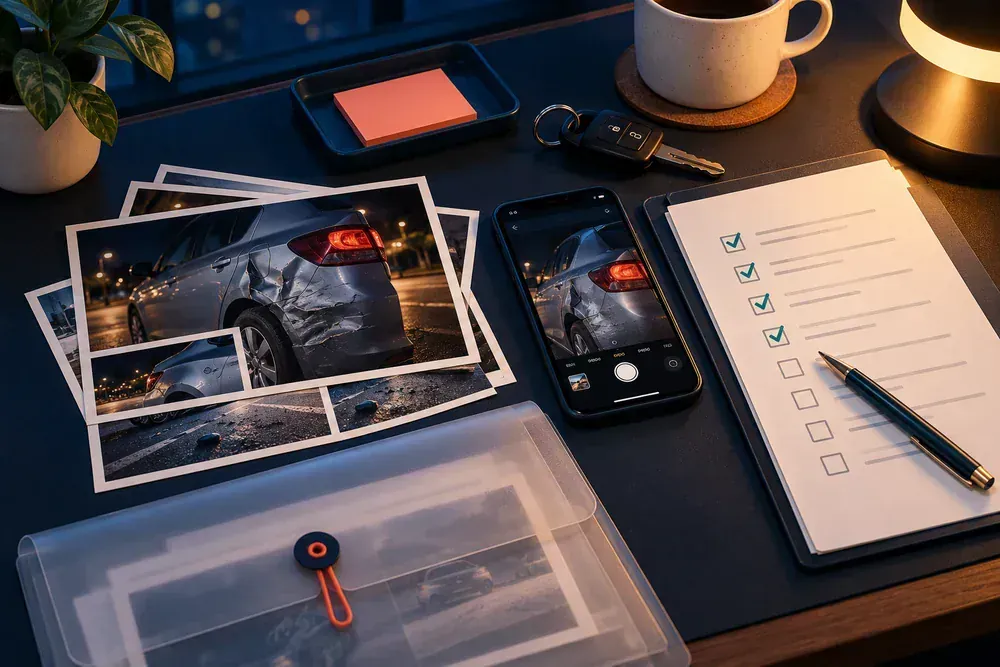
Build an item-by-item theft inventory
- Give each missing item a plain description, approximate purchase date and honest value estimate.
- Connect each item to available ownership evidence such as a photo, receipt, statement or serial number.
- Record the police or incident reference and the insurer's requested format without overstating what is known.
Give every missing item more than a name
A useful inventory connects identity, ownership and value without pretending a missing receipt never existed.
- Item identity
- Record a plain description, brand, model, serial number and condition when known.
- Ownership support
- Link a receipt, earlier photograph, statement, manual, registration or retailer record.
- Value support
- Note purchase timing and an honest comparable item while marking any detail that remains uncertain.
Build the inventory from proof, not memory
- Report immediate danger or required theft information to local authorities.
- Photograph entry points and disturbed areas before cleanup when safe.
- Create an item-by-item inventory with honest descriptions and supporting records.
Turn an item list into a verifiable inventory
The strongest inventory connects each missing item to the event, ownership evidence and a careful description of value.
- Event link
- Give each item an inventory number and connect it to the room, entry-point record, incident report or photograph showing where it belonged. This prevents the item list from floating separately from the reported theft.
- Item identity
- Record a plain name, brand, model, serial number, approximate age and pre-loss condition when known. Mark unknown details rather than choosing a premium model because it looks similar.
- Ownership support
- Search receipts, retailer accounts, earlier room photographs, warranty registrations, manuals, statements and messages. Use more than one source when a single record does not clearly identify the item.
- Value support
- Keep original purchase price, current comparable price and the insurer's valuation separate. Save the comparable listing date and item details so a reviewer can see why it was selected.
Update the inventory when an item is recovered, replaced or documented more accurately. Preserve the earlier version so the change is visible instead of silently overwriting the record.
Connect each missing item to the event
Start with the event record
Save the police or incident reference if one is available, entry-point photos, the approximate time window and names of witnesses or building staff.
Prove ownership flexibly
Receipts are useful, but photos, manuals, serial numbers, card statements, email confirmations and cloud backups may also support ownership.
Do not inflate estimates
Use honest replacement descriptions and disclose uncertainty. Ask the insurer how it handles depreciation, matching items and items without receipts.
Reconstruct records methodically
Search email receipts, retailer accounts, bank statements, photo libraries, warranty registrations and cloud backups. Ask household members for photographs that show rooms or belongings before the theft.
Describe value without overclaiming
Record brand, model, approximate purchase date, condition and replacement example. Keep purchase price, current replacement cost and any insurer valuation separate; they are not automatically the same.
Records that support the next step
A tenant should also coordinate the renters theft claim and landlord record as separate tracks.
Use the insurance evidence checklist to see which scene, ownership and contact records remain open.
For damaged or destroyed property rather than theft, build a room-by-room damage inventory.
Questions about building the record
Can I claim an item without a receipt?
Possibly. Ask what alternative proof the insurer accepts and provide the best truthful record available.
Should I replace items before the insurer responds?
Buy urgent essentials if needed and keep receipts, but ask how replacement and reimbursement work before large purchases.
Processes, rights and deadlines depend on your location, provider and policy. Use the relevant official service for your jurisdiction.